Meta World Generation
Turning a text prompt into a coherent, navigable world.
World generation extends AI from making images and objects to creating places people can navigate. My work connects 3D research with interactive creation, turning model capabilities into environments creators can explore, edit, and build on.
I shaped world representation and agentic orchestration, and I’m grateful for the opportunity to present the work to Meta’s board. Those conversations aligned business needs with emerging AI capabilities and creator workflows, shaping Meta Reality Labs’ product direction and helping move world generation and playable creation from incubation into production.
With support from foundation model teams across XRT and MSL, I evaluated LLM and 3D-generation capabilities against creator needs and aligned teams around the product vision and Meta Connect story. Together, we connected research to creation experiences across Meta AI, Meta Horizon, and Meta Horizon Studio. My thanks to our engineering and AI research collaborators for building these systems with me, bringing a creator’s perspective and design empathy to the work.
- Focus
- Applied AI, Generative 3D, world model
- Platform
- Research system for generating navigable 3D environments, with outputs compatible with game engines, mobile, and web
- Role
- Design Lead [DRI]
- Responsibilities
- executive demo, model eval, system prompts, art direction, AI assistant, user experience and interface design, 3D workflow system, compute use harness, data curation, competitor analysis, org operation, planning, product strategy
I connected 3D research to creation.
From individual objects to complete environments, each step expands what people can create. How a world is represented determines how it can be explored, edited, and connected to agents.
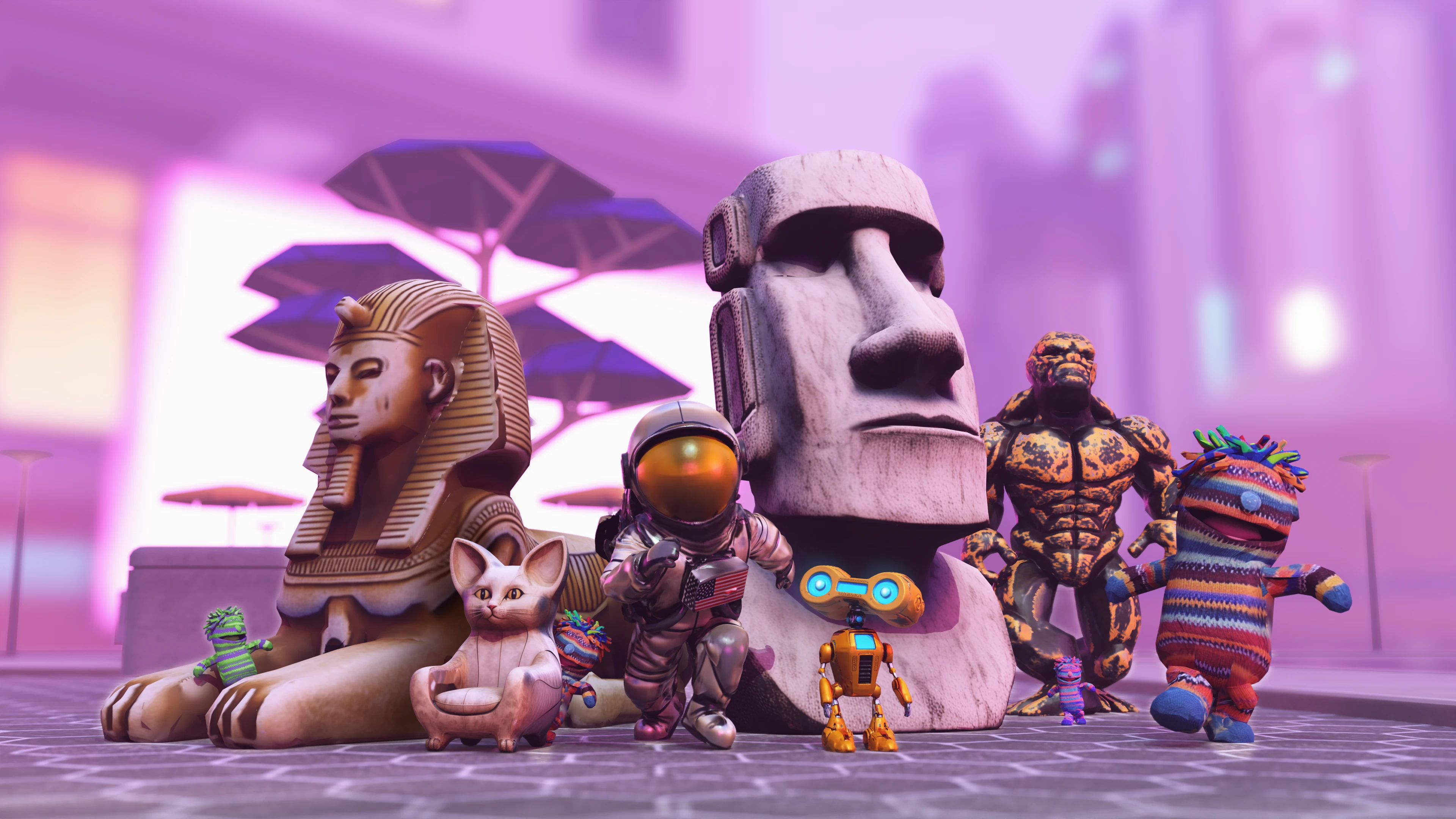
01Asset Generation
The progression begins with an image or prompt becoming a 3D asset. Meta AssetGen gives creators building blocks they can place and refine, with a consistent visual style across objects. This opens up uses from world-building and prototypes to spatial interfaces, 3D icons, and brand experiences.
Research
Interface design in engine
02Environment Generation
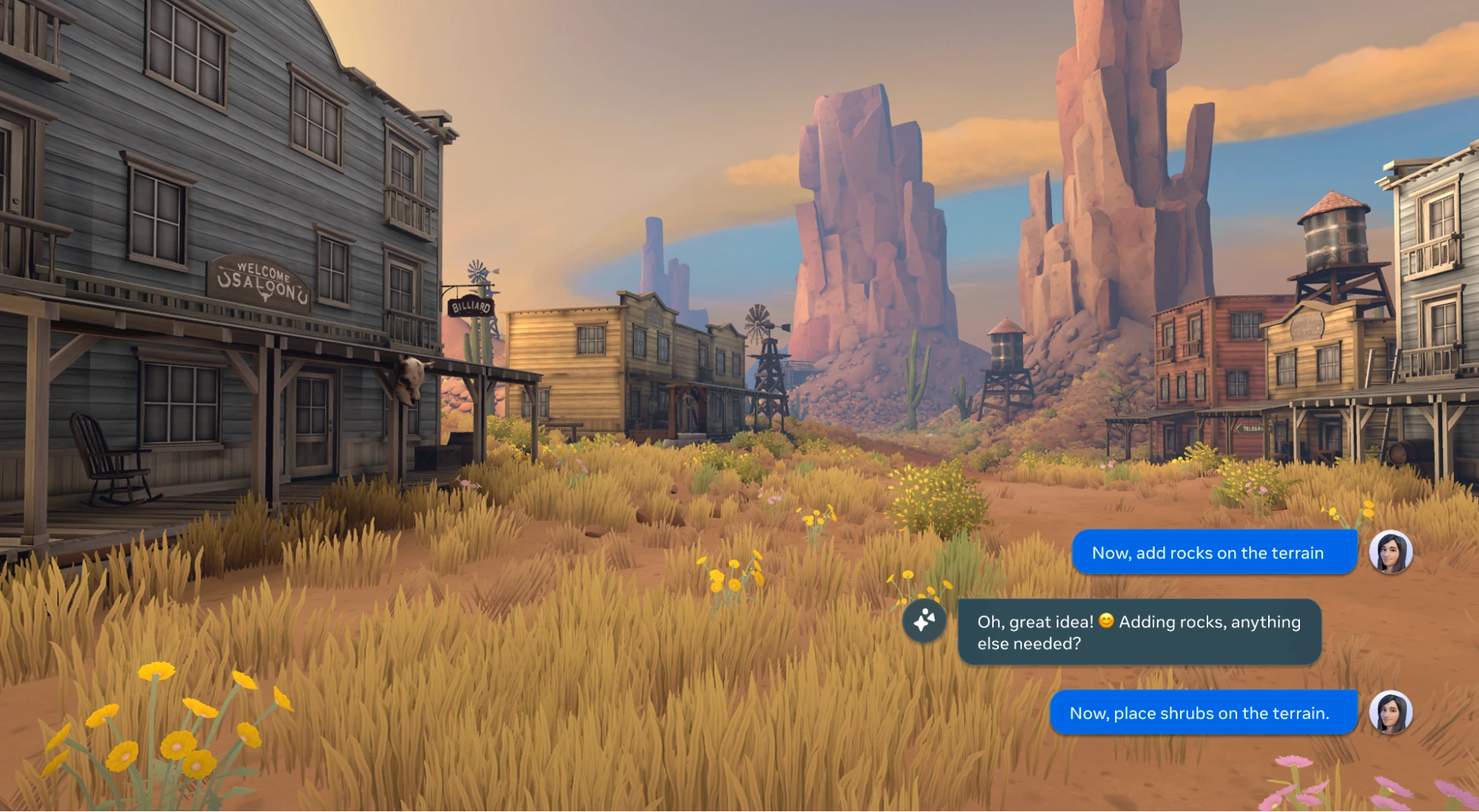
The pipeline worked. The model wasn’t ready for creators.
The early prototype took 5–25 minutes to produce a viewable world. Quality fell short of production needs, and a single, uneditable mesh prevented creators from refining results toward their intent. Creators needed a workflow for generating, editing, and iterating on worlds before a fully capable world model was ready.
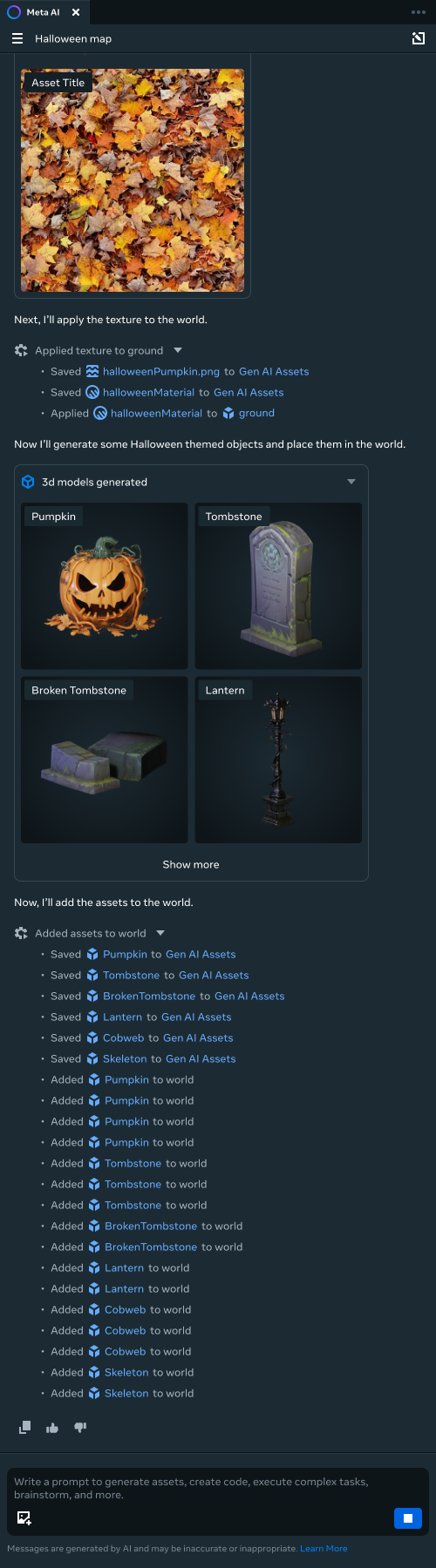
I made editability a core product requirement.
I decided to combine LLMs and 3D-generation models in a shared creation harness, integrating Houdini’s procedural tools and making post-generation editing a core requirement. I aligned engineering and research around this direction and shaped the shared chat experience. Together, we released the project’s first demo to the press and alpha users, then iterated toward an open beta.
Research
Interface design in engine
03World Generation
Across world-generation research, I considered three approaches to representation: multi-view video for visual and spatial consistency; meshes combined with scene layout for editable geometry and control; and NeRF or Gaussian splatting for faithful reconstruction. Each approach shapes how people can experience and work with a world.
Meta’s WorldGen research connects scene planning and 3D generation with coherent, navigable environments. Editable geometry and compatibility with game engines bring representation research closer to the practical needs of interactive creation.

04GSplat (Hyperscape)
Gaussian splatting offers a path grounded in captured reality. Hyperscape illustrates how the appearance of a physical place can be reconstructed for immersive viewing, extending the exploration of world representation to spaces that already exist.
I believe world models will find their next wave of adoption in consumer applications, where people can experience, create, and act within these spaces.
Agentic World Creation
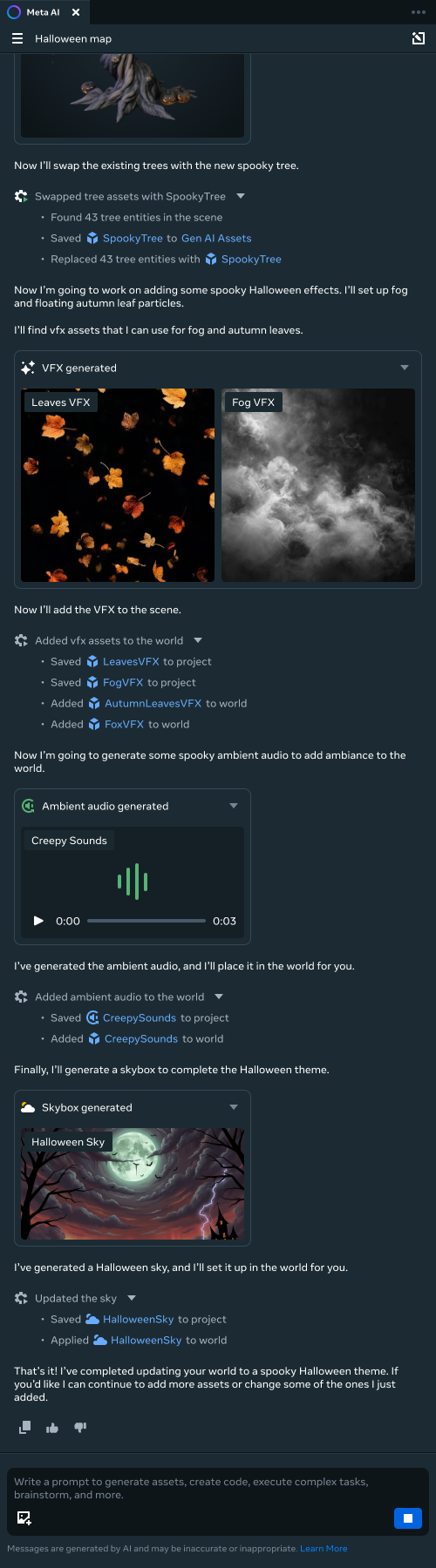
From research to creation products shipped to the general public.
I frame world models through three layers: predictive dynamics, world representation, and agentic orchestration. My work focused on representation and orchestration, connecting LLM and 3D-generation capabilities with user needs, model evaluation, and a cohesive creation workflow.
I brought cross-functional teams together around executive demos and Meta Connect storytelling, advancing world generation and playable creation. The work progressed into agentic creation products shipped to the general public across Meta AI app, Meta Horizon app, and Meta Horizon Studio.