Meta Horizon Studio
AI-native creation that turns ideas into playable worlds
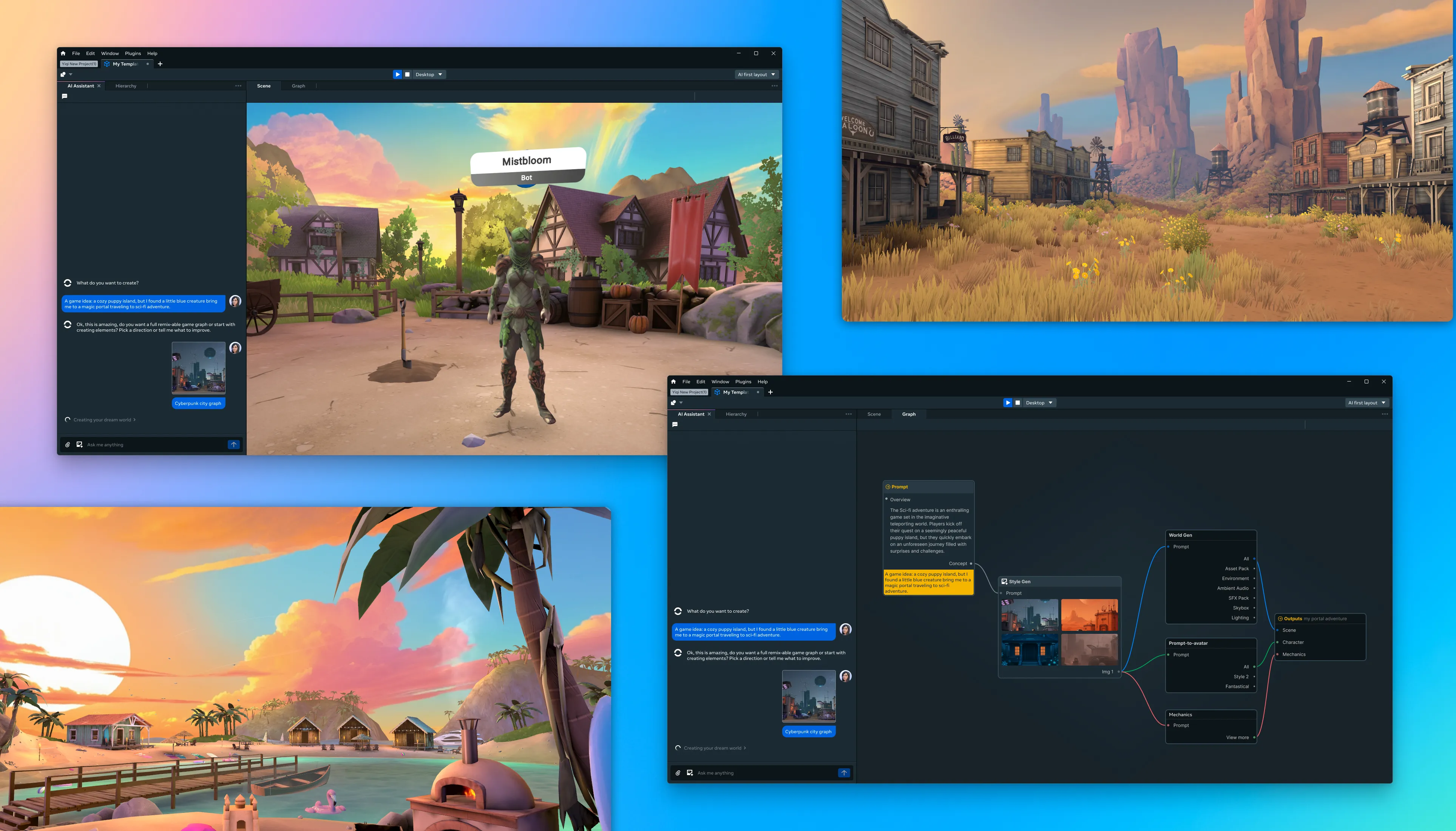
I set the direction for Horizon Studio as an AI-native game engine, shifting its focus from a Unity-style editor for developers toward a creation experience for hobbyists. My design organized environment, character, sound, and game-logic capabilities into specialized sub-agents, coordinated through an AI assistant.
I chose a one-shot-first experience and designed iteration as the core creative loop: prompt, play, and refine. I paired this Prompt-to-Play loop with ChatCanvas, bringing conversation, the live world, and precise visual editing into one workspace.
I incubated the project with a small team and presented the vision to Mark Zuckerberg and the Meta Advisory Group through world-generation demos. We took Horizon Studio from zero to one and launched it at Meta Connect 2025. The shift toward hobbyists broadened participation and resulted in a double-digit increase in top-of-funnel engagement.
- Focus
- Agentic world creation, multi-agent orchestration, AI assistant
- Platform
- Desktop engine · Mobile & VR
- Role
- Design Lead of a vertical team of 26 designers at Meta Reality Labs, collaborating with MSL to adopt frontier models
- Responsibilities
- CEO/Board demos, model eval and benchmarking, two-year vision, art direction, e2e product design, design system, planning, launch videos/press presentation, org operation, growth strategy, UI components, AI-native pods
I designed around
a playable world.
My decisions focused on what creators needed next: a first result to try, a clear view of what changed, and ways to direct the experience as it developed.
01I made the first result playable
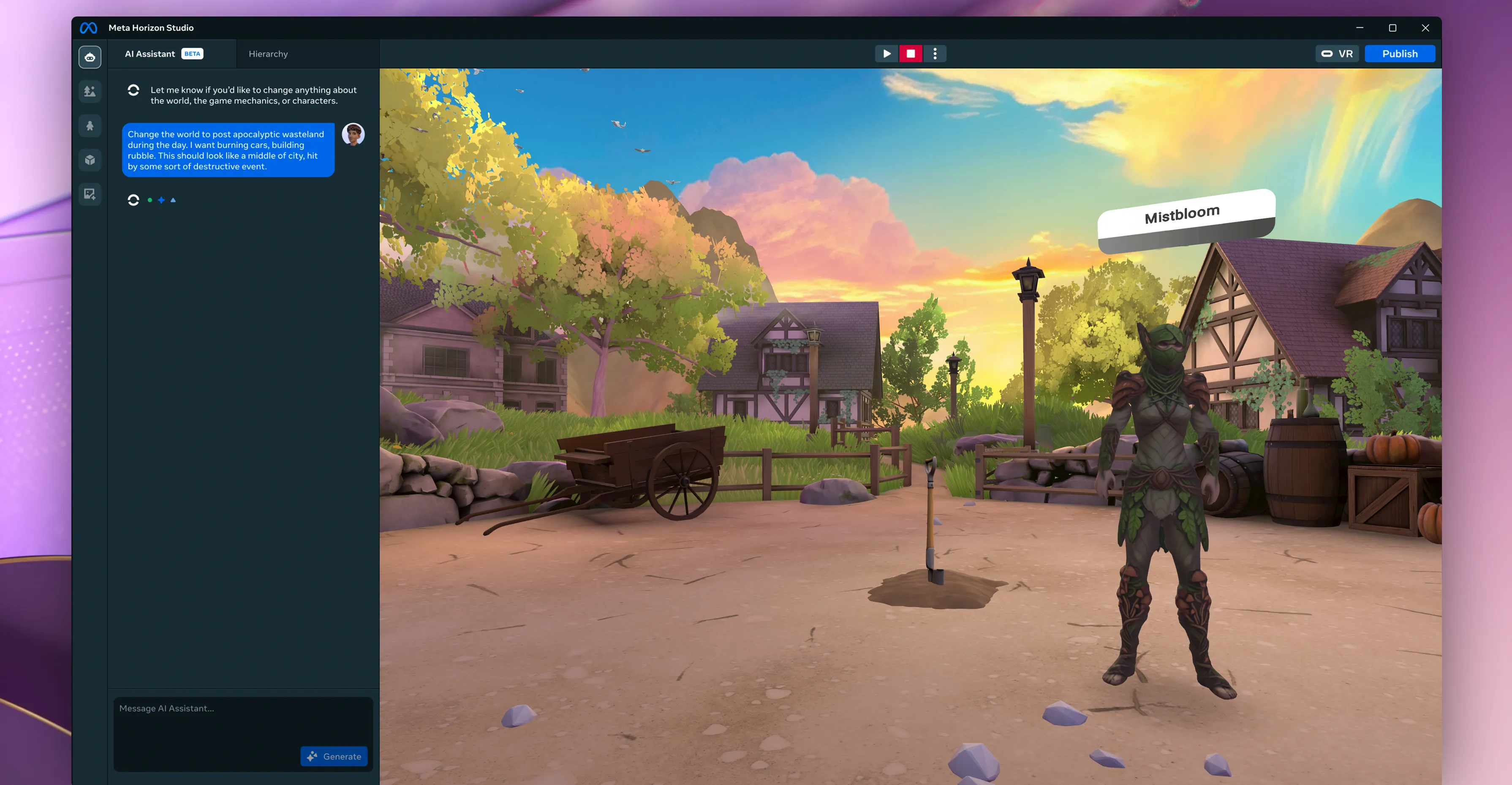
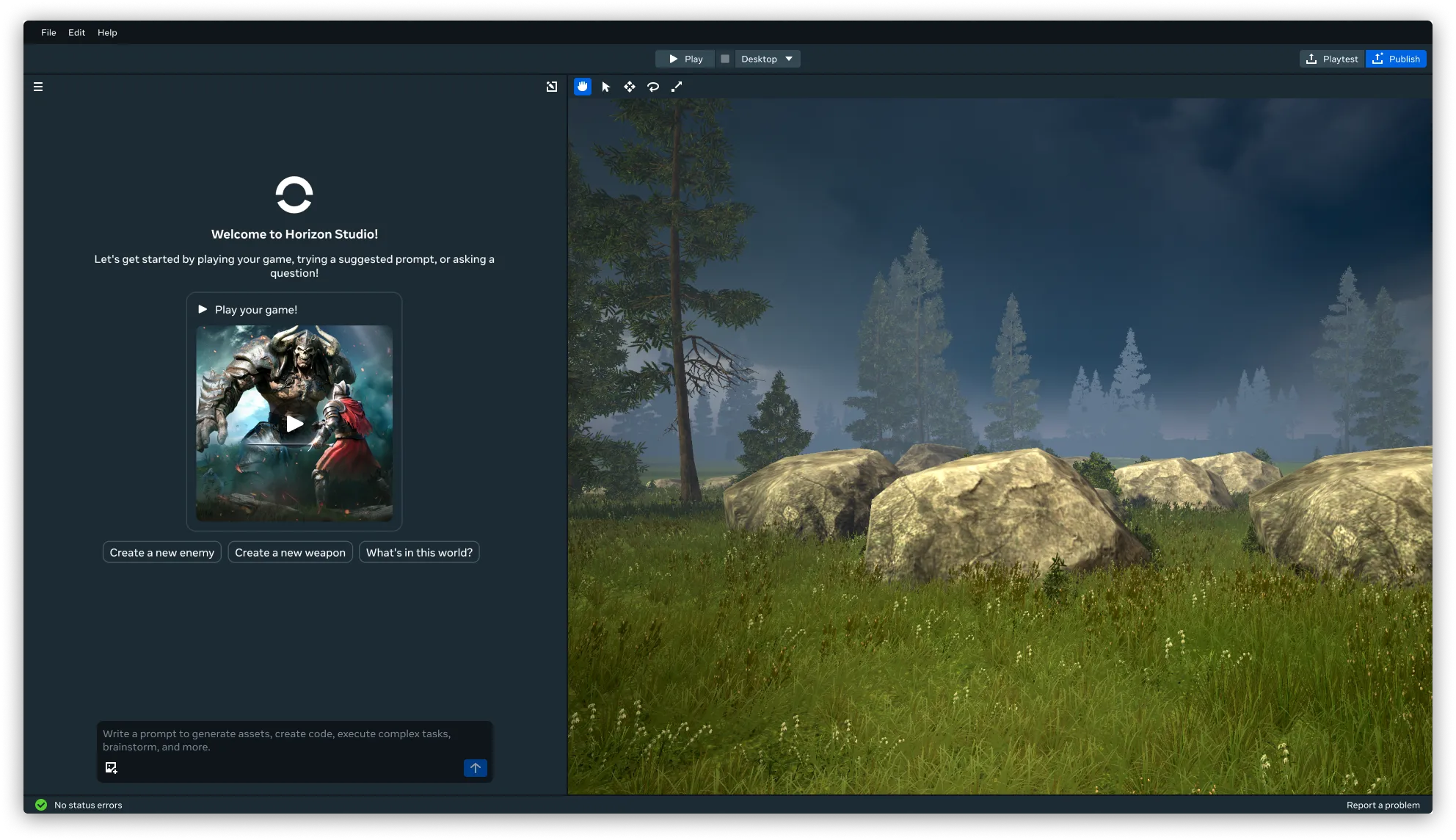
I chose a playable world as the first meaningful milestone. I wanted creators to try an idea early, while it was still easy to change. That shaped a flow where a prompt brings together the environment, characters, sound, and game logic into a first version they can evaluate.
The Connect 2025 demonstration showed a game created with generative AI in under ten minutes.
02I put conversation beside the world
I reduced the primary workspace to chat on the left and the scene on the right, keeping traditional engine tools and controls out of the way. My aim was to let creators connect what they asked for with what changed, without losing sight of the world.
03I made iteration part of creation
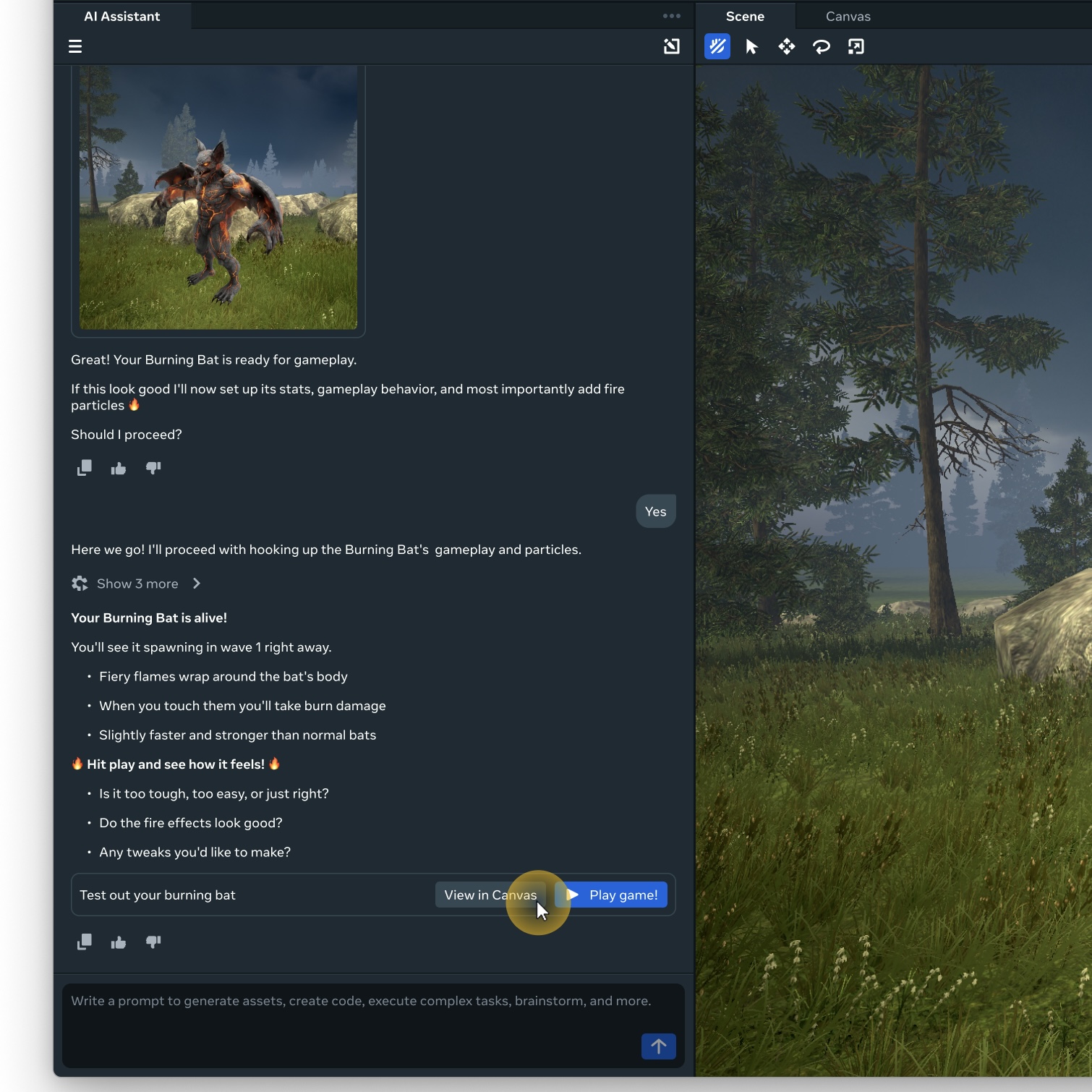
I shaped agentic creation around a live feedback loop: prompt a change, see it, play it, and refine it. With voice-enabled LLM NPCs, I wanted creators to evaluate a character by talking to it in the world. Their next instruction could then respond to what they had just experienced.
Meta’s NPC and creation announcement ●04I paired chat with visual editing
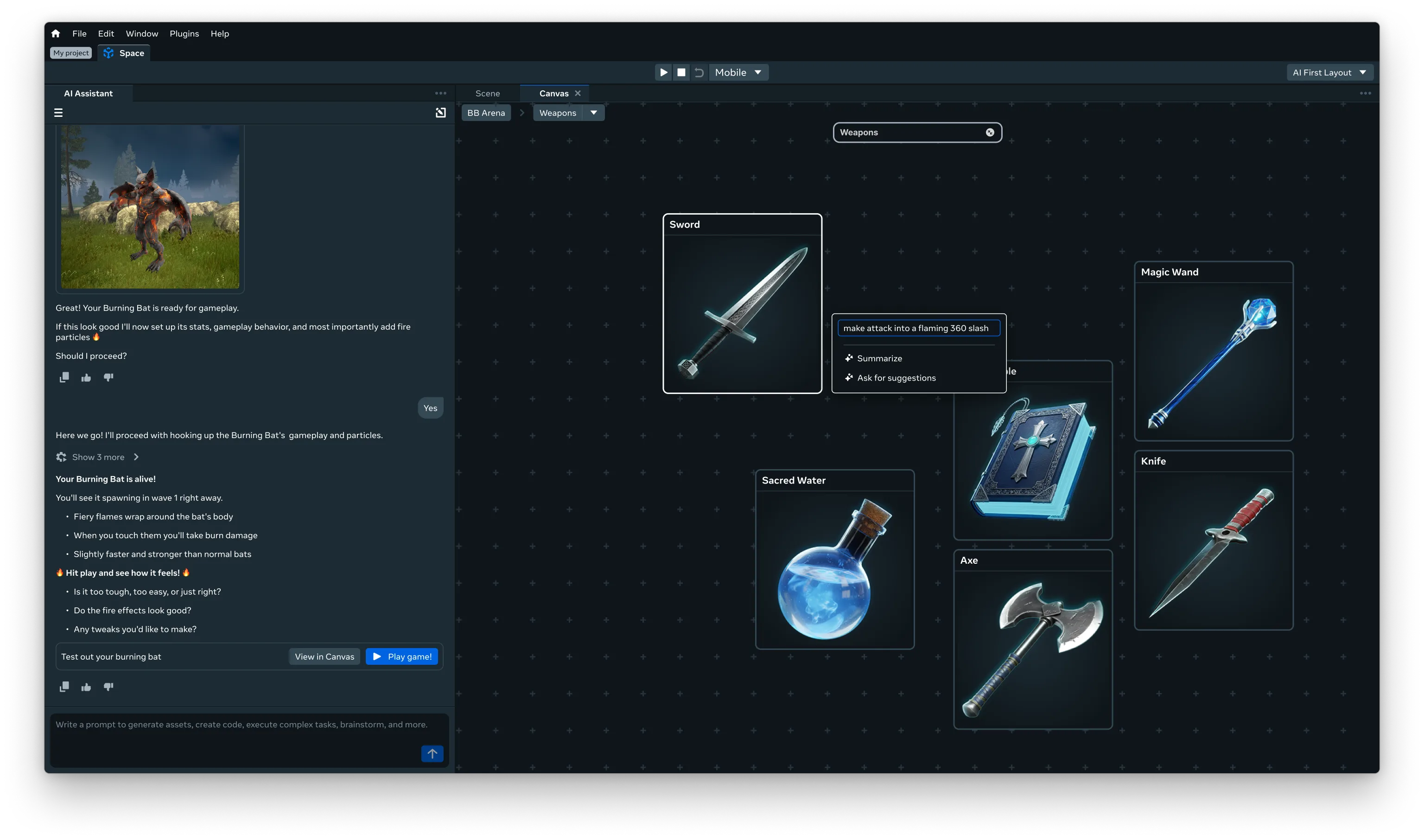
I paired chat with visual editing in ChatCanvas View. My goal was to let creators express an idea in words, then refine it visually when a change needed more precision. Both modes needed to remain part of the same working context as the world developed.
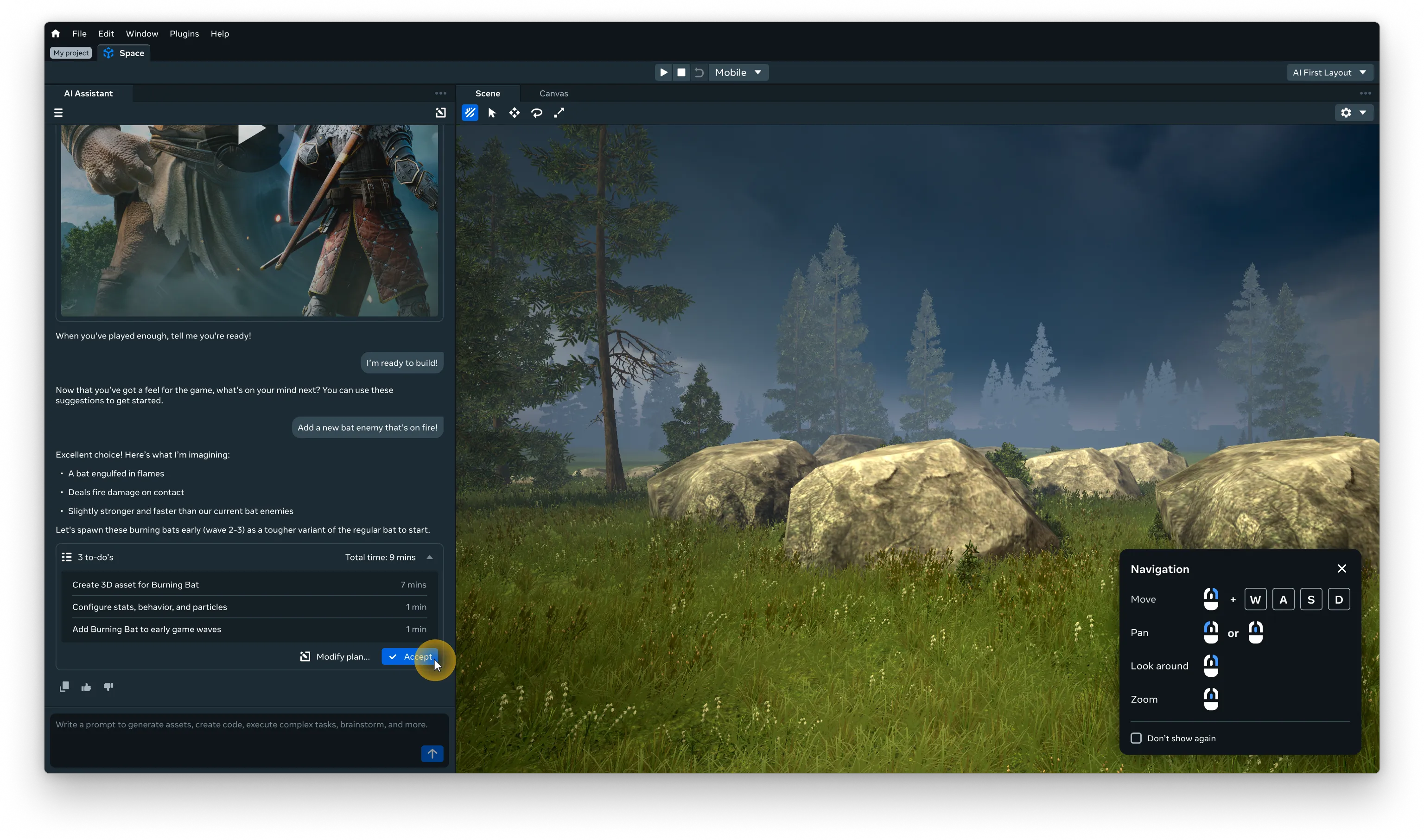
05I chose AI-native over AI-assisted creation
I originally designed the MVP, Horizon Desktop Editor, to preserve pro and semi-pro workflows, adding AI-generated meshes, textures, and skyboxes. For Studio, I designed for hobbyists and a path to consumer scale. Chat became the primary creation process: creators describe intent, the agent builds, and they play and refine the result. My central design question was how much execution to delegate while keeping creators able to understand and steer what AI makes.
Creation continues
after generation.
Public signals from the Desktop Editor and Horizon AI tools, reported by Meta in 2025.
- 5.5hPlayable prototype
- Experienced creator Habitor built Suitcase Scramble using Desktop Editor GenAI tools.Meta creator spotlight · May 2025
- ~60%Eligible creators
- Used Horizon’s generative tools in the preceding 30 days. Roughly one in three new worlds included AI-generated assets that month.Meta Connect · September 2025
- ~15%More time spent
- Meta reported an increase in time spent in Citadel after scripted NPCs were replaced with AI-generated characters.Meta Connect · September 2025
A fast first build gives creators something to test. Chat, live feedback, and visual editing give them ways to keep improving it. The measure of the experience is how well creators can turn a generated world into the game they intended to make.